Introducing Glassblowing Machines
Aperçu des sections
-
-
This lesson introduces the basic machines used in a glass workshop.
-
-
-
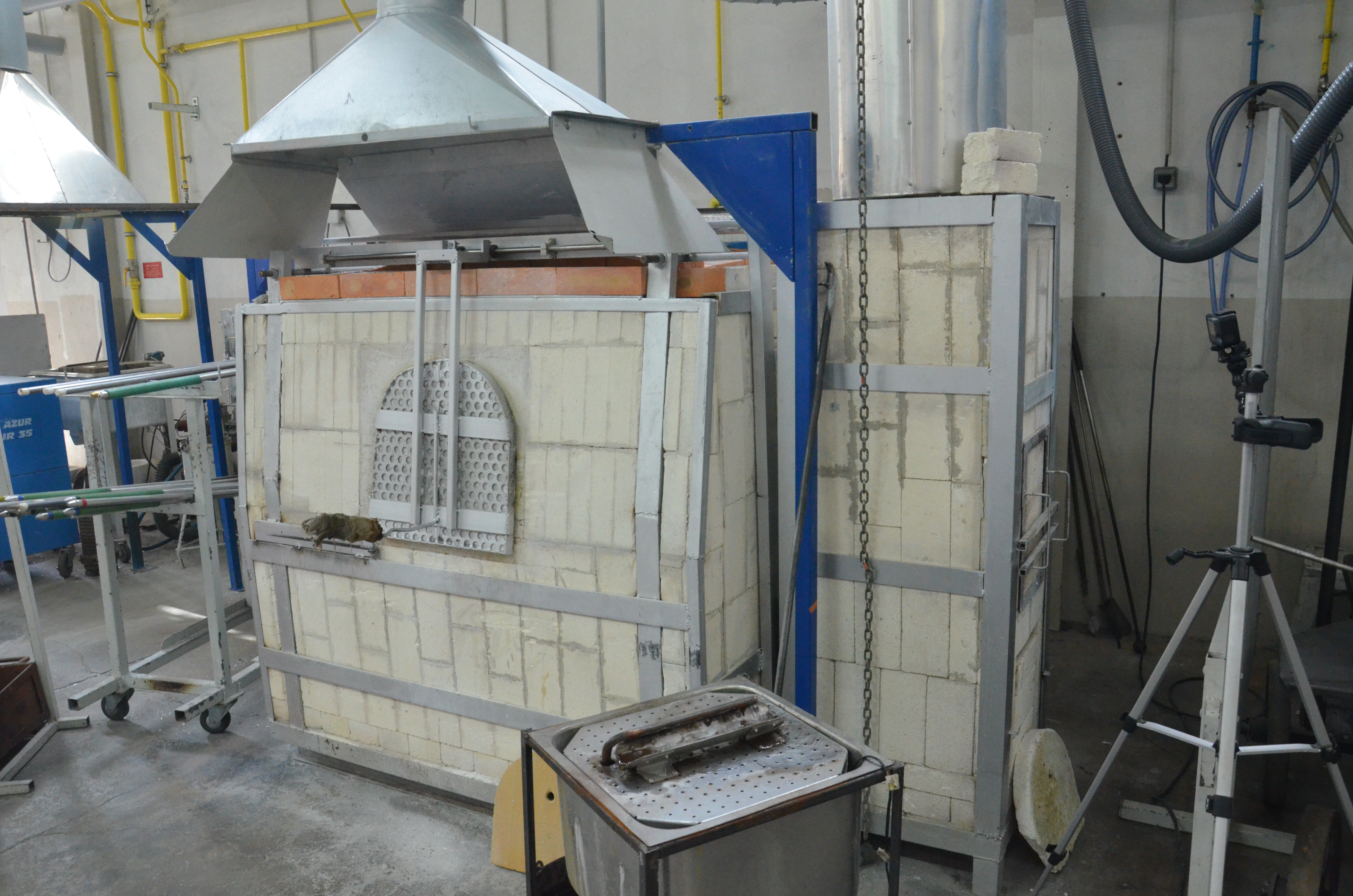
A glass-melting furnace in the context of glassblowing and glass manufacturing, is a specialised piece of equipment designed for the primary function of heating and melting raw materials to create molten glass. These furnaces play a central role in the glass production process. Here's a definition:
Glass-Melting Furnace: A glass-melting furnace is a high-temperature, refractory-lined chamber or kiln designed to heat and melt the raw materials used in glass production, typically a mixture of silica (sand), soda ash, and limestone. It operates at extremely high temperatures, typically 1.130 degrees Celsius for working temperature and over 1.350/1.400 °C for melting (2.066 degrees Fahrenheit for working temperature - over 2462/2552 °F for melting), and serves as the initial step in the glassmaking process. The molten glass produced in the furnace can be gathered then manipulated by glassblowers or used in various glass manufacturing processes to create glass objects, vessels, or other products.
Glass-melting furnaces are carefully engineered to provide consistent and controlled heating, allowing for the precise control of the glass composition and quality. They are a critical component in the glassmaking industry, enabling the creation of a wide range of glass products, from everyday glassware to intricate art pieces.
-
-
-
A glassblowing bench is a specialised workstation or table used by glassblowers for shaping, forming, and manipulating molten glass into various objects. It is an essential component in the glassblowing studio and is designed to accommodate the specific needs of glass artists. A glassblowing bench typically includes the following features:
-
Storage and Organization: Glassblowing benches often have storage space for tools, glass rods, and other equipment, ensuring that everything is within easy reach for the glassblower during the creative process.
-
Tool Rests: The bench may have built-in tool rests or holders to keep various glassblowing tools, such as jacks, shears, and blowpipes, within arm's reach.
-
Comfort and Ergonomics: The design of the bench takes into account the ergonomics of glassblowing, providing a comfortable and functional workspace for the glass artist.
-
Customization: Some glassblowers may customise their benches to suit their specific needs, adding features like adjustable tool rests or shelving for greater efficiency.
-
-
-
-
An annealer is a device used in glassblowing to slowly cool a hot piece of glass to relieve internal stresses and prevent cracking or shattering. The annealing process makes the glass more durable and less likely to break when exposed to thermal shock.
Once the glass has been blown and cooled to a workable temperature, it is placed in the annealer. The annealer is heated to a temperature that is slightly below the glass’ melting point. The glass is then left in the annealer for a period of time to allow the internal stresses to relax. After the annealing process is complete, the glass is cooled slowly to room temperature.
Annealing is an important step in glassblowing to ensure that the finished product is strong and durable. Without annealing, the glass would be more likely to break when exposed to thermal shock, such as sudden changes in temperature.
-
-
-
In the context of glassblowing, the term "glory hole" refers to a specialised piece of equipment used to reheat and maintain the temperature of the molten glass during the glassblowing process. It is a crucial tool in the glassblower's studio and plays a significant role in shaping and manipulating the glass.
The glory hole consists of a refractory chamber or open-ended furnace that is heated to high temperatures, typically ranging from 1,800 to 2,300 degrees Fahrenheit (980 to 1,260 degrees Celsius). Its primary functions are:
-
Reheating: After gathering a small amount of molten glass on the blowpipe from the main furnace (often called the "furnace" or "melting furnace"), the glassblower must periodically reheat the glass to keep it malleable and workable. The glory hole serves this purpose by providing a consistent heat source.
-
Temperature Control: Glassblowers use the glory hole to maintain precise control over the temperature of the glass, allowing them to work on shaping and forming the glass at different stages of the process.
-
Uniform Heating: The interior of the glory hole is typically lined with heat-resistant materials like fire brick or ceramic, which radiate heat uniformly, ensuring that the entire glass piece is heated evenly.
-
Accessibility: The open-ended design of the glory hole allows the glassblower to insert the glass object into the chamber, rotate it, and expose different sections to the heat source for even heating.
-
-
-
-
In the context of glassblowing, a "blowpipe preheater" is a specialised piece of equipment used to heat and prepare a blowpipe for gathering molten glass and forming glass objects. The blowpipe is a hollow metal tube used by glassblowers to gather and manipulate molten glass, and it must be properly heated and prepared before use. The blowpipe preheater serves the following key functions:
-
Heating and Conditioning: The blowpipe preheater is designed to heat the blowpipe to the appropriate temperature, before heating the pipe, ensuring that it is free of any residual moisture and contaminants that could affect the quality of the glass or lead to cracking.
- Efficiency: A preheated blowpipe ensures that the glass adheres properly to the pipe, allowing the glassblower to gather and work with molten glass more effectively.
-
Temperature Control: Glassblowing requires precise temperature control. The blowpipe preheater provides a controlled and consistent source of heat to bring the blowpipe to the desired temperature, typically around 1,000 to 1,200 degrees Fahrenheit (540 to 650 degrees Celsius).
-
Safety: Preheating the blowpipe helps prevent thermal shock, which can occur if a cold blowpipe is plunged into the molten glass. Thermal shock could lead to glass fractures or imperfections, and it can be a safety hazard for the glassblower.
Blowpipe preheaters come in various designs, but they often consist of a heating element and a controlled temperature zone. The glassblower inserts the cold blowpipe into the preheater, and the device gradually raises the temperature of the blowpipe to the desired level. Once preheated, the blowpipe is ready for use in the glassblowing process.
The use of a blowpipe preheater is a standard practice in glassblowing studios to ensure the quality and safety of the glassworking process, as well as to facilitate the proper gathering and manipulation of molten glass.
-
-
-
-
In the context of glassblowing, a "blow torch" refers to a specialised tool or torch used by glass artists to apply focused, controlled heat to specific areas of a glass object during the glassworking process. This tool is distinct from the large furnaces and glory holes used to melt and reheat glass, as it provides more precise and localised heat.
Key features and functions of a blow torch in glass blowing include:
-
Small, Handheld Tool: Glassblowing blow torches are typically compact and handheld, allowing the glass artist to direct the flame precisely where it is needed.
-
Focused Flame: These torches produce a concentrated, adjustable flame that can reach high temperatures. The intensity and size of the flame can often be controlled to suit the specific requirements of the glasswork.
-
Spot Heating: Glassblowers use blow torches to heat specific areas of the glass piece, allowing for precise adjustments, softening, or manipulation of the glass in a localised manner.
-
Annealing and Sealing: Blow torches are used to "strike" or anneal glass joints, ensuring they are properly fused and sealed. This is important when creating complex glass sculptures or multi-part glass objects.
-
Color Application: Some glass blowers use blow torches to apply coloured glass in a controlled manner, creating intricate patterns and designs on their glass pieces.
-
Cold Working: After glass objects are cooled and annealed in an oven (kiln), a torch may be used for cold working, such as polishing, shaping, or finishing specific areas of the glass.
-
Safety: Glassblowing torches are equipped with safety features to ensure that the flame can be easily ignited and extinguished, and that the artist can work with precision while minimising the risk of accidents.
It's worth noting that there are various types of blow torches used in glassblowing, such as oxy-propane torches, oxy-acetylene torches, and natural gas/oxygen torches. Each type of torch has its own advantages and may be chosen based on the specific requirements of the glass work being undertaken. The blowtorch is an essential tool that allows glass artists to add intricate details and make precise adjustments to their glass creations.
-
-
-
-
-
-
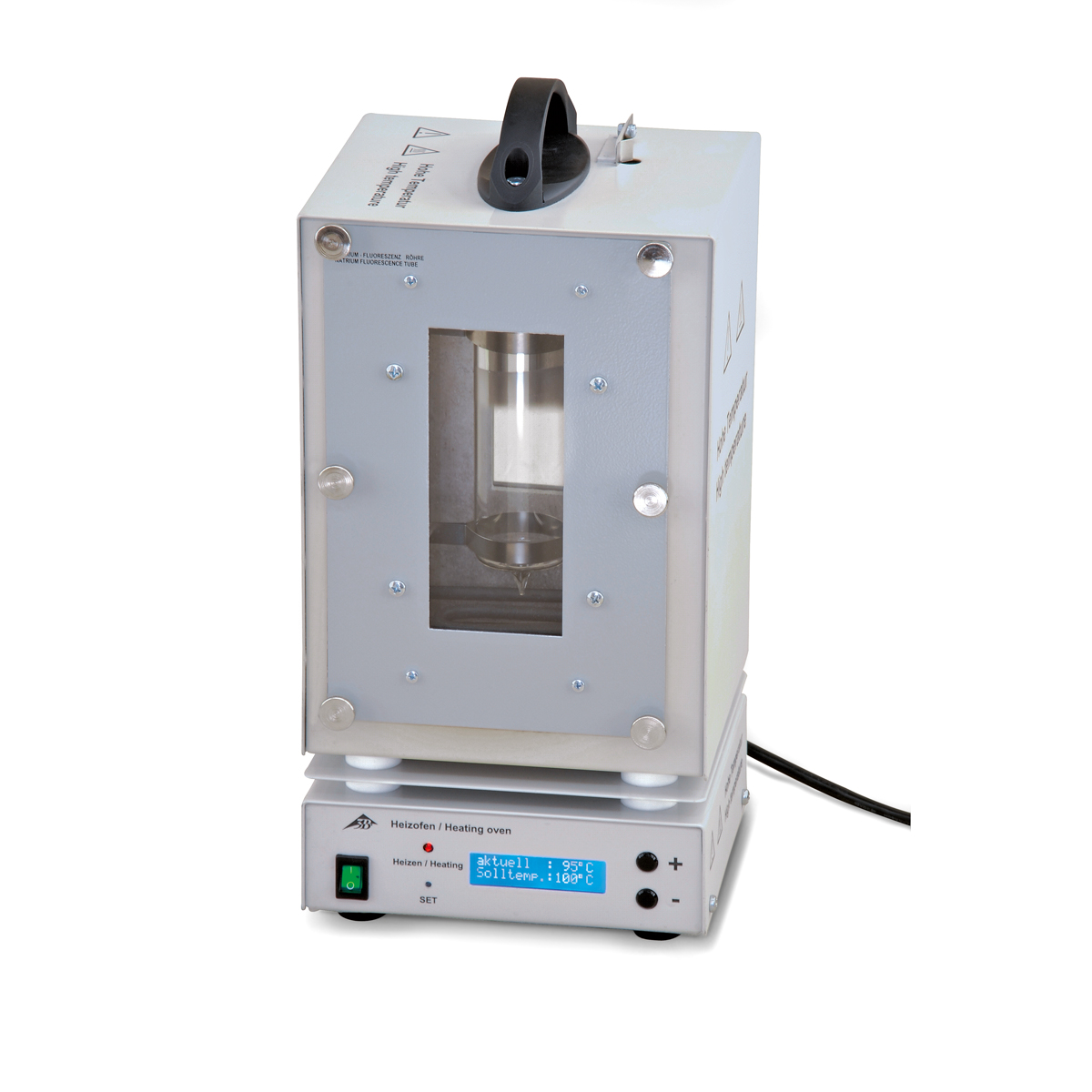
A heating chamber is used to hold parts of objects that are intended to be assembled on the blowpipe while other parts are being made. An oven or kiln is used when making complicated work made from many parts. The parts are kept warm in the garage or kiln until needed. For example, when making complicated rigs, goblets, or just big things, parts are made and then stored in the garage. For a goblet, the foot is made, and then the stem is brought from the garage and attached. Finally, the bowl is brought and attached to the top of the goblet. For soft glass, the right side (cold side) of the garage is kept around the annealing temperature (900 °F / 480 °C), and the left side is usually around 1050 °F (815 °C). For borosilicate, the garage temperature can be set at 980 °F (525 °C) for less intricate pieces and 1080 °F (580 °C) for more complicated pieces.
-